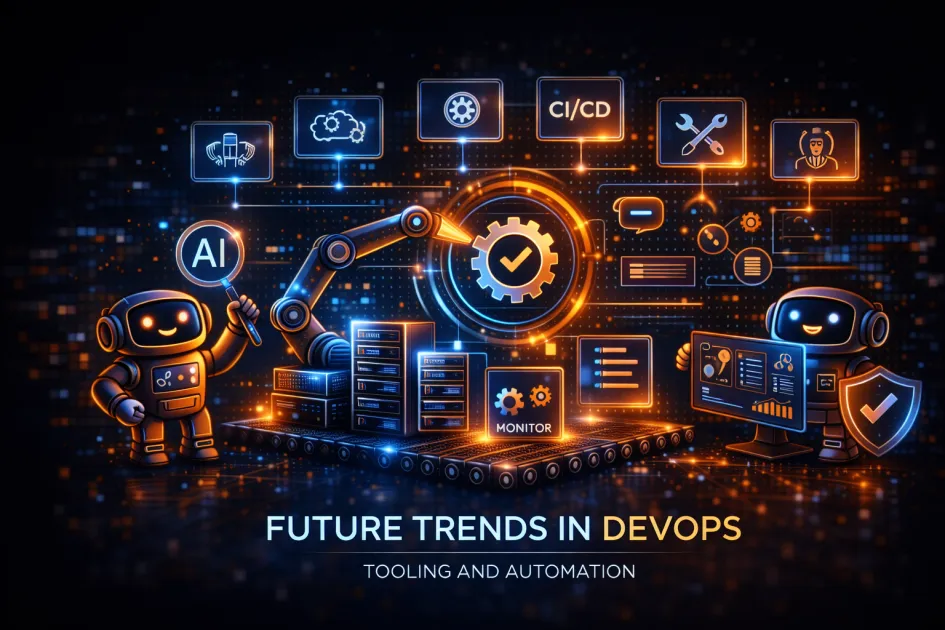
The Future of DevOps Tools Isn’t Just More Automation – It’s Smarter, Weirder, and a Bit Annoying
If you think DevOps is just about automating CI/CD pipelines, you’re already behind. The next wave is AI-infused automation, developer experience platforms, and toolchains that make your old Jenkins setup look like a rotary phone. If you want to stay relevant past 2026, you need to get ahead of these trends – before the tools start automating you, too.
Future trends in devops tooling and automation refer to the rapid evolution of platforms, workflows, and AI-driven systems that streamline software delivery, security, and infrastructure management – often making developers’ lives easier, but sometimes just more complicated in new ways.
What’s Actually Changing in DevOps Tooling
Let’s skip the “DevOps is culture” TED talk. Here’s what’s shifting on the practical front:
- AI-driven automation is eating manual tasks alive. If you’re still hand-writing YAML for deployments, prepare for extinction.
- GitOps isn’t a buzzword anymore – it’s the default for infrastructure management. Everything as code, and the repo is king.
- Platform engineering is the new cool kid. Think of it as SRE, but with more opinionated tooling and less patience for snowflake pipelines.
- Security is shifting left – and not in a “we should care” way, but in a “your code doesn’t ship unless it’s scanned six ways to Sunday” way.
- No-code/low-code DevOps is coming for people who can’t – or won’t – write scripts. Like it or not, business users will deploy stuff too.
Definition Box | GitOps
GitOps is a workflow where infrastructure and application configurations are managed using Git repositories as the single source of truth, enabling automated, auditable, and version-controlled operations.
How AI and Machine Learning Are (Finally) Useful in DevOps
DevOps AI isn’t about robots writing your features for you (yet). It’s about smarter automation – self-healing pipelines, anomaly detection, adaptive monitoring, and auto-remediation. Here’s how this shakes out in the trenches:
- Predictive analytics spots problems before you do – like a nagging manager, but with actual data.
- Intelligent test optimization slashes build times by running only what’s relevant, not every test under the sun.
- Automated incident response means bots can resolve common issues without waking up the on-call engineer at 2 a.m.
- Resource optimization tools (think Kubernetes auto-scaling, but with brains) cut cloud waste and surprise bills.
| Old Way | Emerging Trend |
|---|---|
| Manual pipeline configs | AI-suggested pipeline changes |
| Static monitoring dashboards | Self-tuning observability platforms |
| Hand-written infra scripts | Declarative, repo-driven automation |
Why All This Matters (And How It Bites You If You Ignore It)
Here’s the reality: DevOps tooling isn’t just about efficiency anymore – it’s about survival. Let’s break it down:
- Speed wins. Ship faster or get left behind by competitors with better pipelines and smarter automation.
- Complexity multiplies. Microservices, cloud-native architectures, and container orchestration will eat your sanity if you don’t have solid automation in place.
- Security nightmares. Automated scanning and policy enforcement are your only hope against supply chain attacks and misconfigured cloud resources.
- Developer burnout. Better tools mean fewer 3 a.m. alerts and less time spent on boring, repetitive work.
Ignore these trends and you might as well be deploying from a thumb drive. In a world where tech giants battle for platform dominance and regulatory headaches, automation is your best defense.
Practical Steps | Getting Ready for the Next-Gen DevOps Stack
So, how do you actually prepare for this avalanche of smarter automation and ever-more-opinionated tools? Start here:
- Audit your current toolchain. What’s manual that shouldn’t be? Where are the pain points?
- Adopt GitOps workflows. Shift to repo-driven automation for infra, not just code.
- Embrace AI-powered tools. Look at platforms like Harness, GitHub Copilot, or StackStorm for smarter CI/CD and incident response.
- Integrate security early. Use static analysis, dependency scanning, and policy enforcement from the first commit.
- Experiment with platform engineering. Standardize environments and golden paths for developers – yes, even if they complain.
- Don’t fear no-code/low-code tools. Evaluate them, especially for repetitive workflows and business process automation.
Pro tip: If your automation stack doesn’t make you at least slightly uncomfortable, you’re probably not pushing far enough.
Common DevOps Tooling Mistakes (Yes, You’re Probably Making One)
- Overcomplicating pipelines until nobody can debug them except the person who quit last month.
- Ignoring documentation. Future-you hates you for this.
- Not automating security checks – and then acting surprised by vulnerabilities.
- Refusing to refactor legacy scripts because “they work.” Until they don’t.
- Blindly adopting every new tool without considering interoperability.
FAQ – Real Questions About Future DevOps Automation
Will AI replace DevOps engineers?
Not anytime soon. AI will just take over the boring parts so you can focus on the work that actually needs human brains (and sarcasm).
Is GitOps worth the hype?
Yes. Once you try it, you’ll hate going back to manual infra changes. Versioning, audit trails, and rollback are game-changers.
What’s the difference between platform engineering and DevOps?
Platform engineering is about building opinionated, reusable environments and tools for developers. DevOps is the broader practice of automating and optimizing delivery – platform is a specialization.
How do I get started with AI-driven DevOps tools?
Start small. Integrate a single AI-powered tool (like automated test selection or anomaly detection) and expand as you see value.
Do no-code DevOps tools have a place in real organizations?
Yes, especially for workflows that business users need and IT doesn’t want to touch. Just watch out for shadow IT and governance headaches.
Final Thoughts | DevOps Tools Aren’t Getting Simpler, Just Smarter
The future of DevOps tooling and automation is here – whether you’re ready or not. Every year, the gap widens between teams that embrace these trends and those that don’t. Get curious, get uncomfortable, and start experimenting. Who knows, maybe your next “DevOps engineer” will be a bot with better taste in alerts than you.