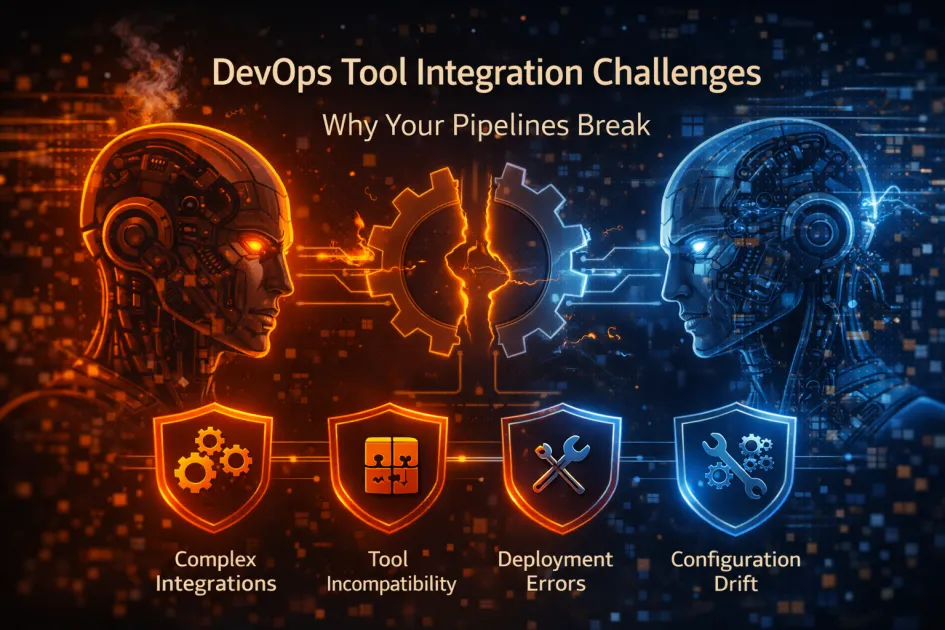
Integrating DevOps Tools Is Messier Than You Think
If you think plugging in a few DevOps tools will magically fix your delivery pipeline, you’re in for a rude awakening. Integrating DevOps platforms often means battling incompatible APIs, broken workflows, and security nightmares – all while your team pretends everything’s “agile.” Here’s the real story behind common challenges when integrating DevOps tools, and why even seasoned engineers end up muttering at their screens.
Integrating DevOps tools is the process of connecting automation, version control, CI/CD, monitoring, and collaboration platforms to streamline software delivery. It aims to reduce manual work, but often triggers compatibility, process, and security headaches that slow teams down.
Why Integrating DevOps Tools Feels Like Herding Cats
DevOps integration isn’t just buying the latest CI/CD platform or slapping on a Kubernetes dashboard. It’s a careful (read: painful) dance between code repositories, automation servers, infrastructure provisioning, container orchestration, and monitoring. Let’s break down why this so often goes sideways:
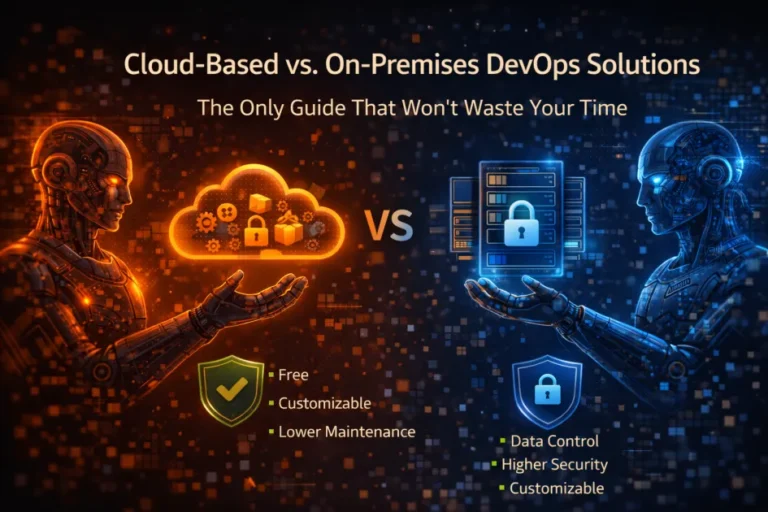
- Tool Overload – Every team loves their own flavor of tools, from Jenkins to GitLab CI, Terraform, Docker, and ten different alerting systems. Good luck making them all talk nicely.
- API Mayhem – Half the integrations rely on APIs that change as often as your local weather. One update and your whole workflow collapses like a house of cards.
- Process Chaos – No two teams agree on workflows. One group’s “release candidate” is another’s “untested mess.” Integration exposes these differences, usually in the worst possible way.
- Security Fiascos – Stitching together tools means stringing credentials, tokens, and SSH keys everywhere. One slip and someone’s mining crypto on your staging environment.
- Legacy Baggage – Old systems and new cloud-native tools? Mixing those is like bolting a Tesla engine into a 1980s sedan. Technically possible, but you’ll regret it.
The Big Headaches and How to Avoid Them
Compatibility Nightmares
Different tools use their own communication protocols, data formats, and update cycles. You want to connect GitHub Actions to your on-premise Jenkins? Sure, if you enjoy debugging YAML and OAuth errors until 2am. Even the “integrates out of the box” stickers usually mean “works if you’re lucky and don’t blink.”
Pro tip: Before you add a tool, map out its dependencies, check version compatibility, and – radical idea – talk to your operations team. This alone will save you from integration-induced migraines.
Workflow Disconnects
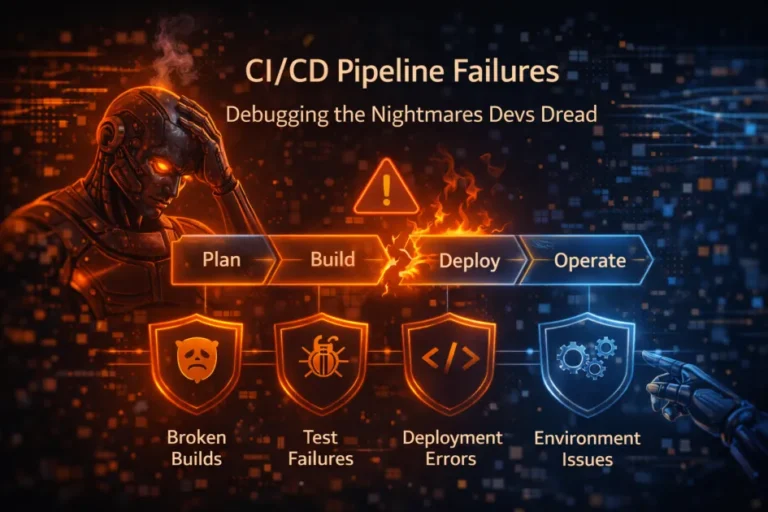
Automation is fantastic right up until you realize your new pipeline works for microservices, but breaks for legacy monoliths. Suddenly, your team’s “seamless deployment” is a patchwork of manual steps and skipped tests. The blame game begins.
Solution? Standardize workflows before you integrate. Build a process map, agree on key steps, and make sure each tool fits the whole journey. If your teams can’t agree, you’re doomed before you start.
Security Gone Wild
No one enjoys rotating secrets – except hackers, who love when you forget. Integrating cloud platforms, infrastructure-as-code, and monitoring with half-baked credential management is asking for trouble. Just wait until an expired secret halts your production deployment at midnight.
Better way: Use centralized secret stores (think HashiCorp Vault or AWS Secrets Manager) and automate key rotation. Limit permissions, log everything, and – obvious but often ignored – review audit trails regularly.
Monitoring the Unmonitorable
Now your toolchain is live. How do you know it’s working? Spoiler: You probably don’t. Disconnected monitoring means you catch failures only when users start yelling. Integrating monitoring and log aggregation is an afterthought, until it isn’t.
Quick fix: Bake in observability from the start. Tools like Prometheus, Grafana, and ELK stack make it easier, but only if you actually connect all the dots. Set up alerts that matter, not just noise.
Real-World Integration Blunders to Dodge
- Ignoring Documentation – Skipping the docs? Enjoy the wild west of “unknown error” messages. Read before you integrate.
- No Rollback Plan – If integration fails, can you revert? Or do you just cross your fingers and hope nobody notices?
- Chasing Shiny Objects – That new tool on Hacker News looks cool. Will it play nice with what you already have? Probably not.
- Assuming Cloud Fixes Everything – Migrating to AWS/GCP/Azure can help, but it also adds new layers of configuration hell.
Best Practices That Actually Work
- Audit Your Current Stack First – Know what you have before you bolt on new tools.
- Start Small and Modular – Integrate one thing at a time. Test. Then move on.
- Use Standard Interfaces – REST APIs, OpenAPI specs, and webhooks save lives.
- Automate Everything (With Caution) – Automate, but keep manual overrides for when things inevitably go sideways.
- Document and Communicate – Write down what’s wired to what. Share it with every cranky engineer on your team.
Key Terms Explained
- DevOps Toolchain – The set of connected tools used for development, testing, deployment, and monitoring.
- CI/CD – Continuous Integration and Continuous Delivery; the backbone of automated software deployment.
- Infrastructure as Code (IaC) – Managing infrastructure (servers, networks) via code (e.g., Terraform, Ansible).
- Observability – The ability to measure the internal state of a system based on its outputs (logs, metrics, traces).
- Secret Management – Securely storing and handling sensitive credentials, keys, and tokens used in automation.
FAQ
Why is DevOps tool integration so difficult?
Because every tool was built for a slightly different universe. APIs break, workflows clash, and nobody agrees on best practices. Integration exposes all of this at once.
What’s the biggest cause of failed integrations?
Poor planning and lack of communication. Teams rush in, skip documentation, and forget to standardize workflows. The result? A Franken-stack held together by duct tape.
Which tools play best together?
Platforms with strong REST APIs, webhooks, or native connectors (think GitHub, GitLab, Jenkins, Terraform, Docker, Prometheus). But always check current compatibility.
How do you manage secrets across tools?
Use centralized secret managers like HashiCorp Vault, AWS Secrets Manager, or Azure Key Vault. Rotate credentials regularly and automate as much as possible.
Can legacy systems be integrated with modern DevOps tools?
Yes, but expect pain. Use adapters, APIs, or wrapper scripts. Sometimes, rewriting is less painful than integrating ancient tech.
Wrap-up
Integrating DevOps tools isn’t for the faint of heart. Expect friction, plan for messiness, and document everything. If you’re lucky, your pipeline won’t bite back – at least not too hard.