When News Outlets Decide Your Tech Is Either Savior or Doomsday Device
Pick up any tech publication right now and you’ll notice something peculiar. The same emerging technology gets framed as either humanity’s next great leap or an existential threat depending on which outlet you’re reading. Mythos – the emerging technology narrative framework gaining traction across media landscapes-is experiencing exactly this split personality treatment from major news organizations.
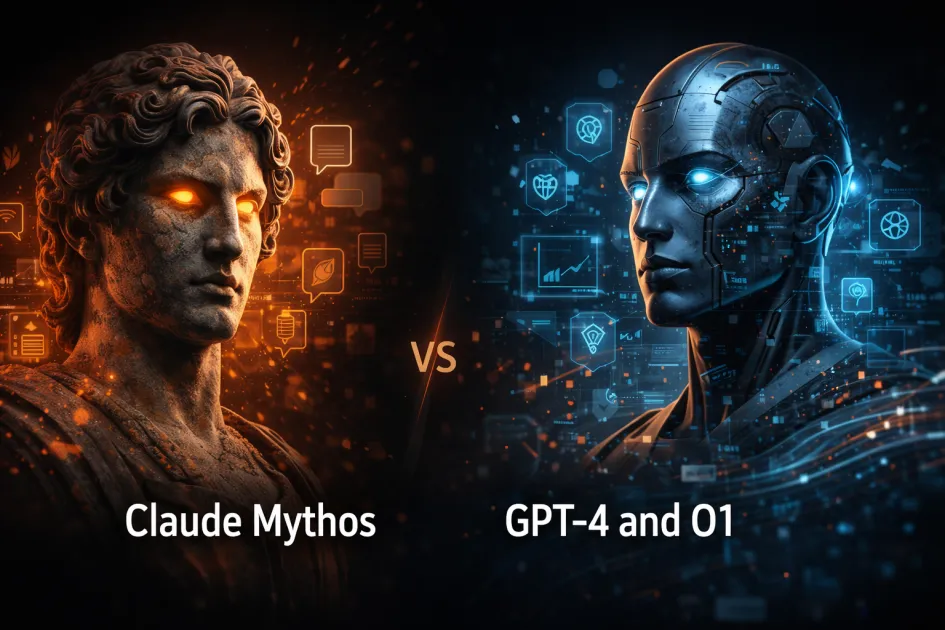
Media outlets frame emerging technologies like Mythos in dramatically opposing ways. Some position it as transformative innovation that will reshape industries and solve complex problems. Others characterize it as dangerous, unpredictable, and potentially harmful to society. This polarized coverage shapes how the public understands and adopts new technologies, often based more on editorial perspective than actual evidence.
The Two-Narrative Problem in Tech Journalism
Here’s the thing about how news organizations cover transformative technology-they’re not playing it straight. You get two camps, and they’re operating from completely different playbooks.
On one side, you’ve got outlets treating Mythos like it’s the next internet. They run headlines about revolutionary potential, interview venture capitalists who’ve already made their bets, and generally treat skepticism like a character flaw. These pieces focus on possibility, disruption, and the future being now. They’re not wrong about the potential, but they’re definitely not interested in dwelling on complications.
The other side? They’re writing cautionary tales. Regulatory concerns, security risks, ethical implications, job displacement-these become the lead story. The technology becomes a threat that needs containment rather than exploration. Again, not wrong necessarily, but heavily weighted toward the downside.
The problem is that your average reader doesn’t have time to triangulate between these competing narratives. They read one or two pieces and form an opinion based on whatever framing they encountered first. That’s not how informed decision-making works.
Why Media Outlets Love the Extremes
Let’s be honest-nuance doesn’t drive clicks. A headline saying “Emerging Technology Shows Promise With Some Legitimate Concerns” will lose to “This Could Change Everything” or “Why This Technology Terrifies Experts” every single time.
Major news outlets operate under real business pressure. Engagement metrics matter. Sensationalism sells. So when covering something like Mythos, the incentive structure pushes toward maximalist takes rather than balanced analysis. You’re not getting journalism failures here-you’re getting rational responses to economic incentives.
Tech companies themselves play into this dynamic. They pitch their innovations to friendly outlets with carefully crafted narratives about transformation and progress. Meanwhile, privacy advocates, ethicists, and critics get their own media channels where they emphasize worst-case scenarios. Both sides are optimizing for their audience and their message.
The result? Fragmented public perception that says more about media economics than about the actual technology.
How Public Perception Gets Shaped by Coverage Patterns
When TechCrunch, Wired, The Verge, and traditional outlets like The New York Times all cover the same technology, you’d think there’d be some consistency. Instead, you get different stories entirely.
Tech-focused publications tend toward innovation narratives because their audience expects it. They’re covering emerging technology as a beat. Readers come to these sites specifically to learn about what’s next. So the framing leans optimistic, even when covering legitimate concerns.
Mainstream media outlets, meanwhile, approach the same technology through a different lens. They’re asking “Is this safe? Should we be worried? What are the implications for regular people?” Their audience isn’t tech enthusiasts-it’s the general public that needs context and risk assessment.
Neither approach is inherently wrong. The problem emerges when people only consume one type of coverage and assume they’ve got the full picture. Someone reading only tech blogs thinks Mythos is the future. Someone reading only mainstream skepticism thinks it’s a threat. Both are operating with incomplete information shaped by editorial choices they didn’t make consciously.
The Dangerous Framing of “Transformative” Without Guardrails
When outlets frame Mythos purely as transformative, they’re doing something subtle but significant-they’re removing friction from the adoption narrative. Transformation becomes inevitable. Skepticism becomes obsolete thinking.
This framing matters because it influences policy decisions, investment flows, and public acceptance. If enough media outlets position something as the inevitable future, regulators face pressure to get out of the way. Companies move faster. Public opposition softens because “fighting progress” feels futile.
The “transformative” narrative also tends to sideline the people who’ll be disrupted by that transformation. Workers in affected industries, communities facing implementation challenges, people with legitimate privacy or safety concerns-they become obstacles to progress rather than stakeholders whose concerns deserve serious engagement.
This isn’t unique to Mythos. It’s happened with social media platforms, cryptocurrency, AI, and basically every major technology shift. The outlets pushing transformation narratives aren’t necessarily being dishonest-they’re genuinely excited about possibilities. But excitement isn’t the same as analysis.
The Equally Problematic “Danger” Framing
Now flip the script. When outlets lead with danger, they’re also making editorial choices that shape perception in specific ways.
Worst-case scenario coverage can be useful. Someone needs to ask the hard questions about security, ethics, and unintended consequences. That’s important journalism. But when danger becomes the primary frame, it can stall beneficial innovation and create public panic that outpaces actual risk.
The “dangerous technology” narrative also tends to be more emotionally sticky. Fear is a powerful motivator. A headline about potential risks will resonate longer than a balanced assessment of tradeoffs. So outlets leaning into danger get rewarded with engagement, which incentivizes more danger-focused coverage.
This creates its own distortion. Technologies that could solve real problems get blocked or delayed because public fear, amplified by media coverage, makes them politically toxic. Meanwhile, less visible but equally consequential technologies operate with minimal scrutiny because they don’t trigger the same alarm response.
What Actually Happens When Coverage Gets Polarized
The real damage from polarized framing shows up in how societies actually respond to new technology. You don’t get thoughtful regulation. You get either regulatory capture (where industry shapes rules) or regulatory panic (where rules get written by people who don’t understand what they’re regulating).
Public trust gets fragmented. If you’ve been reading transformation narratives and then encounter danger narratives, you start wondering who’s being honest. That skepticism toward media coverage extends to skepticism toward institutions more broadly. It’s not healthy.
Investment and innovation flows get distorted. Entrepreneurs and venture capitalists track media narratives closely. If Mythos is getting hammered in mainstream outlets, funding dries up even if the technology itself is sound. If it’s getting glowing coverage in tech media, money floods in without adequate due diligence. Neither scenario produces optimal outcomes.
Most importantly, regular people trying to form informed opinions get trapped between competing narratives with no clear way to adjudicate between them. You end up trusting whichever outlet confirms what you already believed, which is the opposite of learning.
Finding Signal in the Noise
So what do you actually do when media coverage of emerging technology like Mythos is this fragmented?
First, recognize that polarized framing is a feature of modern media, not a bug. Outlets aren’t necessarily lying-they’re optimizing for different audiences and different business models. Acknowledging that helps you read coverage with appropriate skepticism.
Second, actively seek out coverage that disagrees with your instincts. If you’re naturally optimistic about technology, read the skeptics. If you’re naturally cautious, engage with the innovation narratives. This isn’t about finding balance-it’s about forcing yourself to understand the strongest version of arguments you don’t already accept.
Third, look for coverage that explicitly addresses tradeoffs. Who’s writing about what Mythos could enable AND what it could disrupt? Who’s discussing implementation challenges without dismissing the core value proposition? Those pieces are rarer, but they exist, and they’re worth your time.
Fourth, distinguish between different types of outlets. Tech publications covering emerging technology should be read differently than mainstream media outlets. Neither is wrong-they’re just serving different functions. Tech media helps you understand what’s coming. Mainstream media helps you understand implications and risks. You need both.
Why This Matters Beyond Just Mythos
The media fragmentation problem around Mythos isn’t really about Mythos specifically. It’s about how we collectively make sense of technological change when information sources are polarized and incentives reward extreme takes.
This pattern will repeat with whatever emerges next. New AI capabilities, quantum computing breakthroughs, biotechnology advances-they’ll all get the same treatment. Some outlets will frame them as salvation. Others will frame them as threat. Most people will encounter whichever framing their filter bubble presents and assume that’s the full story.
That’s not a sustainable way to govern technology or make informed public choices. But it’s where we are, and it’s unlikely to change without significant shifts in how media outlets operate or how audiences consume information.
For now, the best you can do is stay aware of the framing itself. Notice when you’re reading transformation narrative versus danger narrative. Ask what incentives might be shaping the coverage. Seek out perspectives that challenge your existing assumptions. It’s more work than just accepting whatever narrative you encounter first, but it’s the only way to actually understand what’s happening with emerging technologies.
FAQ | Media Coverage and Technology Perception
Why do different outlets cover the same technology so differently?
Different outlets have different audiences, business models, and editorial perspectives. Tech publications serve audiences hungry for innovation coverage and operate under engagement incentives that reward excitement. Mainstream outlets serve broader audiences and prioritize safety and impact analysis. Neither is wrong-they’re just optimized for different functions. The problem emerges when people only read one type and assume it’s comprehensive.
Is the “transformative” framing actually harmful?
It can be. While transformation narratives help people understand potential, they also create pressure for rapid adoption without adequate safeguards, sideline legitimate concerns, and can stall important questions about implementation and equity. The framing isn’t inherently wrong, but it becomes problematic when it’s the only narrative people encounter.
How do I know which outlets to trust on emerging technology?
Look for outlets that acknowledge tradeoffs explicitly, distinguish between possibility and probability, and engage seriously with both opportunities and risks. Be skeptical of coverage that presents only upside or only downside. Track which outlets have been right about previous technology predictions and which have been consistently wrong. And remember that trust should be conditional-good outlets can miss things or be wrong about specific technologies.
Does media coverage actually influence how technology gets adopted?
Absolutely. Media framing influences public perception, which influences regulatory pressure, investor confidence, and consumer adoption. A technology that’s heavily covered as dangerous faces regulatory headwinds and public skepticism even if the actual risks are manageable. One that’s covered as transformative gets investment and adoption momentum even if serious concerns exist. Coverage doesn’t determine outcomes, but it significantly shapes the path.
What’s the best way to stay informed about emerging technology without getting trapped in polarized narratives?
Read across outlets with different perspectives. Engage with both tech-focused and mainstream coverage. Seek out pieces that explicitly discuss tradeoffs and implementation challenges. Pay attention to who’s making claims and what their incentives might be. Most importantly, maintain healthy skepticism toward all coverage, including coverage that confirms your existing beliefs.
The Bottom Line
Media coverage of emerging technology like Mythos will continue to be polarized because the incentives driving that coverage aren’t going away. Outlets will keep optimizing for engagement, audiences will keep seeking confirmation of their existing beliefs, and the gap between “transformative” and “dangerous” narratives will keep widening.
The only antidote is active, critical consumption of information. You can’t rely on any single outlet to give you the full picture. You have to do the work of seeking out competing perspectives and forming judgments based on what you actually learn rather than what any particular narrative tells you to believe. It’s harder than just accepting whatever framing you encounter first, but it’s the only way to actually understand what’s happening with the technologies reshaping the world.