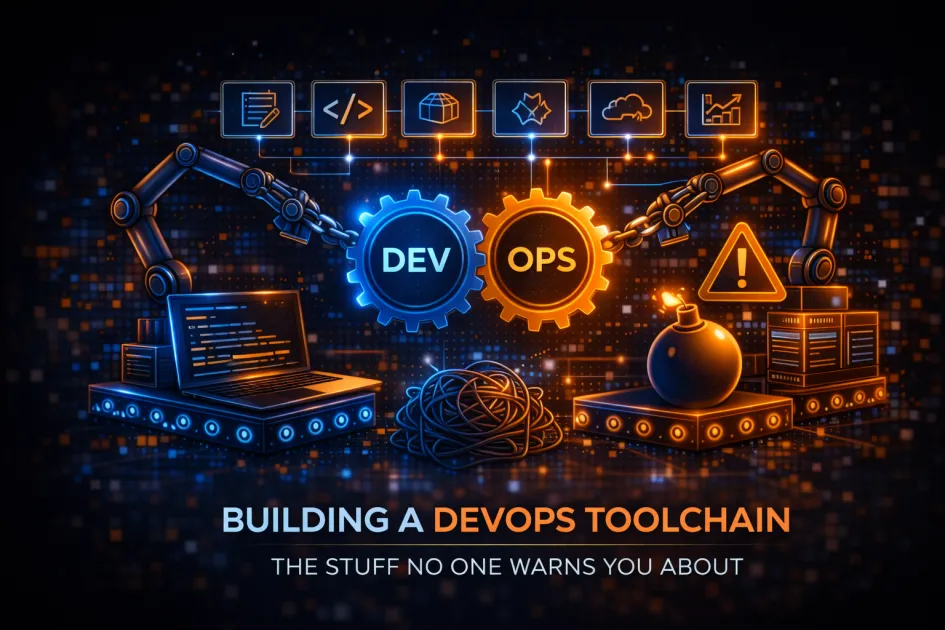
DevOps Toolchains Aren’t Magic (Sorry, Not Sorry)
If you think slapping a bunch of trendy tools together makes you “DevOps,” you’re already in trouble. A DevOps toolchain is the connected set of software and services that automate, monitor, and streamline the entire software delivery lifecycle – development, integration, deployment, and operations. The real trick? Choosing tools that actually work together and, ideally, don’t make your team regret their career choices.
In this guide, you’ll get the blunt truth about what makes a DevOps toolchain essential – and the pitfalls that catch even the “we’re Agile now!” crowd off guard.
What’s in a DevOps Toolchain, Anyway?
A proper devops toolchain isn’t just Jenkins and some duct tape. It consists of tools and practices designed to automate software development and IT operations, bridging the gap between developers and sysadmins. The “toolchain” bit comes from the fact that each tool is a link – break one, and the whole thing falls apart.
Here’s what you’ll find in a setup that doesn’t make your engineers cry:
- Version Control: The non-negotiable. Git, Mercurial, or Subversion if you’re feeling retro.
- Continuous Integration (CI): Jenkins, GitHub Actions, GitLab CI – because manual builds are for masochists.
- Continuous Delivery/Deployment (CD): Spinnaker, ArgoCD, Azure DevOps. You want code shipped, not just built.
- Configuration Management: Ansible, Chef, Puppet. Herding servers shouldn’t require black magic.
- Containerization/Orchestration: Docker, Kubernetes, OpenShift. Welcome to the “my app runs everywhere” fantasy.
- Monitoring & Logging: Prometheus, Grafana, ELK Stack. Because “it works on my machine” is not a strategy.
- Collaboration & Issue Tracking: Jira, Slack, Trello. Because sticky notes don’t scale.
Mix and match, but do it with intent. Frankenstein’s monster isn’t a role model here.
Definition Box – Continuous Integration (CI)
Continuous Integration refers to the automated process where code changes are merged, built, and tested frequently, reducing integration headaches and catching bugs early in the pipeline.
How to Build a DevOps Toolchain That Works (And Doesn’t Sabotage You)
Here’s the not-so-secret recipe for a DevOps toolchain that doesn’t implode:
- Map Your Workflow: Figure out how code moves from “idea” to “running in production” in your world.
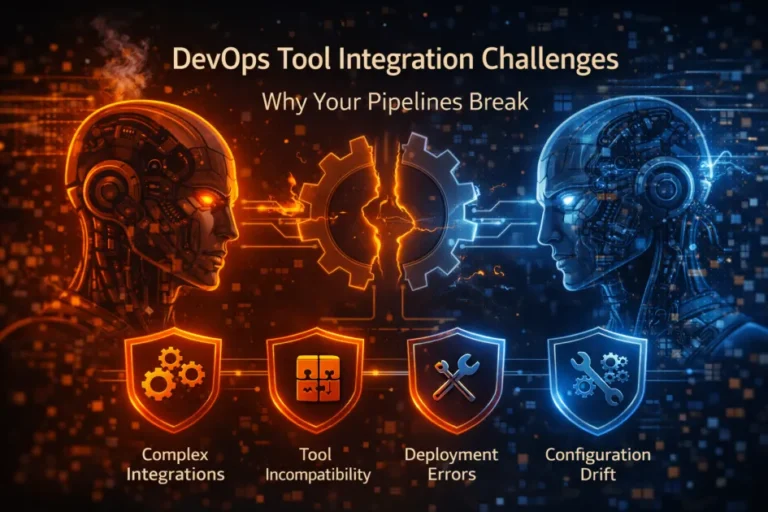
- Pick Tools That Actually Integrate: If your CI server and deployment tool don’t talk, you’re just adding steps.
- Automate Ruthlessly: Testing, building, releasing, monitoring – if a tool can do it, let it.
- Centralize Logging and Monitoring: Flying blind is fun until something catches fire.
- Use Infrastructure as Code: Terraform, CloudFormation, or Pulumi. Manual server setup is so 2012.
- Make Security Boring: Add vulnerability scanning (think Snyk or Aqua), not drama.
- Document the Whole Mess: If only one person understands your pipeline, you’re doomed.
DevOps Toolchain Essentials Table
| Stage | Purpose | Popular Tools |
|---|---|---|
| Code | Version control & collaboration | Git, GitHub, GitLab |
| Build | Compile & test automation | Maven, Gradle, Jenkins |
| Test | Automated quality checks | Selenium, JUnit, Cypress |
| Release | Automated deployment | Spinnaker, ArgoCD |
| Deploy | Infrastructure provisioning | Terraform, Ansible, Kubernetes |
| Monitor | Performance & error monitoring | Prometheus, Grafana, ELK |
Why Your DevOps Toolchain Will Fail (Unless You Avoid These Traps)
Let’s be honest, most “DevOps transformations” are just expensive ways to rearrange your headaches. Here are the classic mistakes:
- Tool Overload: More tools, more problems. Pick what you need – ditch the rest.
- Ignoring Culture: No tool fixes a toxic blame game. Collaboration isn’t optional.
- Poor Documentation: Tribal knowledge is not a long-term strategy.
- Skipping Automation: Every manual step is a future outage waiting to happen.
- Neglecting Security: Nobody wants to be the next headline breach.
Practical Steps to Build a DevOps Toolchain (No Nonsense)
- Audit what you already use. List every tool, plugin, and script – yes, even that bash monstrosity.
- Identify gaps. Where does the process break down or slow to a crawl?
- Choose tools with strong integrations. If they play nice with others, your life gets easier.
- Automate the repetitive stuff. If a task feels soul-crushing, script it.
- Centralize monitoring and alerting. Guessing is not a strategy.
- Test the toolchain end-to-end. Don’t wait for production to find out what’s broken.
- Keep your docs up to date. Otherwise, future you (or your replacement) will curse your name.
And yes, you’ll need buy-in from your team. Even the best toolchain flops if nobody uses it.
Common Questions About DevOps Toolchains
- What’s the difference between CI and CD?
CI (Continuous Integration) automates building and testing code. CD (Continuous Delivery/Deployment) automates pushing that code to production or staging. Both are vital, but CD is where the real risk – and reward – lives. - Can I build a DevOps toolchain without containers?
You can, but why? Containers make environments consistent, deployments faster, and rollbacks less painful. Unless you love snowflake servers, use containers. - How do I keep my toolchain from becoming a monster?
Review it regularly. Prune unused tools, update what you keep, and standardize configs. Simplicity is underrated. - Is there a “best” tool for DevOps?
Nope. The best tool is the one your team can use effectively and that fits your workflow. Ignore Reddit wars about “the one true CI server.” - How do I handle security in my DevOps pipeline?
Integrate static code analysis, vulnerability scanning, and secrets management from day one. Make it boring and automated. If it feels like an afterthought, you’re doing it wrong.
The Bottom Line
A DevOps toolchain is only as strong as its weakest link. Build it well, automate aggressively, and don’t fall for the “one tool to rule them all” myth. Most importantly, keep humans in the loop – at least until the AI overlords take over.
If you care about how tech teams really work, the Technokrome newsletter digs deeper into the messy reality of modern development.