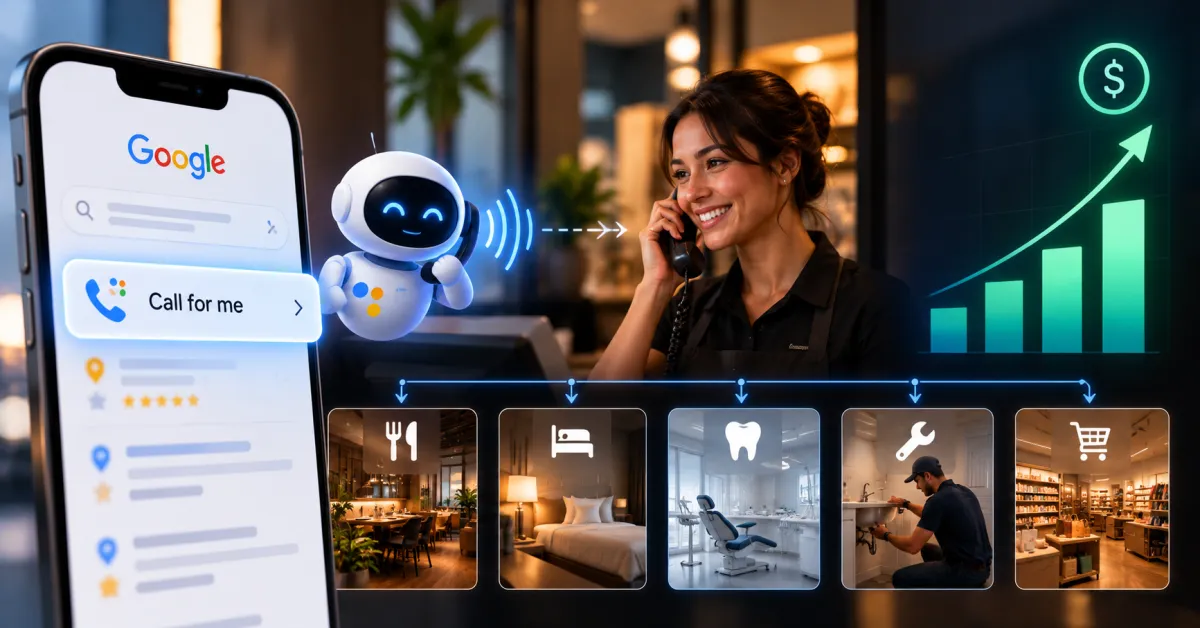
Google Call for Me sounds like a feature designed by someone who’s never actually had to run a business. But here’s the thing – it’s actually solving a real problem for certain types of companies. The feature lets potential customers call your business directly from Google Search results without leaving the search page. No copying numbers, no switching apps, no friction. Just a tap and they’re talking to you.
Not every business benefits equally from this feature. Service-based companies with high call volumes, seasonal demand spikes, or appointment-driven models see the biggest wins. Retail shops, local service providers, and restaurants tend to convert better through calls than other channels. If your business model relies on quick phone conversations to close deals or book appointments, Google Call for Me can actually move the needle on your bottom line.
Who Actually Benefits From Google Call for Me
Let’s cut through the noise. Google Call for Me works best when three things align – your customers prefer calling, your business can handle call volume, and phone conversations directly lead to revenue or bookings.
Local service businesses are the obvious winners here. Plumbers, electricians, HVAC contractors, and locksmith services get hammered with search traffic from people with immediate problems. Someone’s pipe is burst at 2 AM. They’re not comparing options on your website. They’re searching “emergency plumber near me” and they want to call someone right now. Google Call for Me cuts the friction to near-zero.
Medical and dental practices see solid performance too. Patients searching for a new dentist or doctor want to ask questions before booking. They might want to confirm insurance acceptance or ask about wait times. A phone call answers these faster than filling out a contact form and waiting for a callback.
Restaurants and food delivery benefit when it’s peak ordering time. Someone’s hungry, they search “pizza near me,” and calling to place an order beats navigating a clunky website or app. High-volume ordering businesses convert better through calls than most other channels.
Home services – think cleaning companies, landscapers, moving services – all see strong performance. These are businesses where customers want quotes or want to discuss specifics before committing. A quick call replaces back-and-forth emails.
The Industries Where This Feature Struggles
Some businesses shouldn’t bother optimizing for this feature. If your customers prefer self-service, email, or live chat, Google Call for Me is just noise in your Google Business Profile.
E-commerce and online retail rarely benefit. Someone buying a laptop online doesn’t want to call customer support before purchase. They want to add to cart and checkout. Calls might help with post-purchase issues, but that’s a support function, not a sales driver.
SaaS and software companies see minimal ROI. Your customers want free trials, documentation, and demo videos. Cold calls from search results feel intrusive. Enterprise sales teams might use phone, but that’s sales-qualified leads calling you, not random search traffic.
High-volume retail chains don’t need this. Target, Best Buy, and similar stores don’t want random customers calling their main line. They’ve optimized for in-store visits and online orders. A call feature would just create support headaches.
Subscription services generally underperform here too. Netflix doesn’t want you calling to ask about their plans. Neither do most SaaS platforms. Self-service signup converts better than phone conversations for these models.
Scenarios Where Google Call for Me Performs Optimally
Performance varies dramatically by scenario. The feature works best when specific conditions exist.
Emergency and urgent services
When someone has an immediate problem, they call. A burst pipe, a dead battery, a locked-out situation – these aren’t “let me fill out a contact form” moments. Emergency plumbers, locksmiths, roadside assistance, and urgent care clinics see strong call-through rates. The person searching has already decided they need help. They just need to reach someone fast.
Time-sensitive bookings
Salons, spas, and fitness studios benefit when customers want same-day or next-day appointments. Someone’s thinking “I need a haircut this week” and calling beats navigating an online booking system that might show no availability. Hotels and vacation rentals see similar patterns during peak travel seasons.
Complex service quotes
Contractors, movers, and home renovation companies need to discuss project details before quoting. A quick phone call lets them ask questions – square footage, timeline, existing conditions – that determine pricing. This conversation is easier on a call than through email back-and-forth.
Local search with purchase intent
When someone searches “[service] near me,” they’re usually ready to buy or book. They’ve moved past research mode. A call option at this moment converts better than making them click through to a website. This works for restaurants, gyms, salons, and repair shops.
Limited availability windows
Seasonal businesses like tax preparation services, holiday decoration companies, or summer camps see spikes in demand during specific periods. Google Call for Me helps capture that surge when people search and want immediate answers about availability and pricing.
What Actually Impacts Performance
Beyond industry, a few factors determine whether this feature actually works for you.
Call handling capacity matters. If you can’t answer calls quickly, this feature becomes a liability. Someone calls, reaches voicemail, and moves to your competitor. You need either staff available to answer or a solid call management system.
Your Google Business Profile quality affects visibility. If your profile has incomplete information, old hours, or poor reviews, fewer people will see the call button. Optimization here is non-negotiable.
Local search visibility determines traffic. This feature only helps if you’re ranking for relevant local searches. A plumber in Denver won’t get calls from this feature if they’re not showing up in Denver search results.
Call-to-action clarity matters. Customers need to understand what they’re calling about. A vague business category confuses people. Clear descriptions of what you do and what you offer on your profile drives more qualified calls.
Review quality influences click-through rates. A business with 4.8 stars gets more call clicks than one with 3.2 stars. Reviews signal trustworthiness, especially for phone contact.
Common Mistakes That Kill Performance
Even businesses in ideal industries mess this up. Here’s what kills results.
Ignoring call data is the biggest mistake. Google provides call analytics – duration, time of day, source. Most businesses never check this. You can’t optimize what you don’t measure. Check your call data monthly and adjust your strategy.
Forwarding to the wrong number tanks performance. Some businesses route calls to a main line where they get lost in the queue. Route to the right department or person who can actually help. A 10-minute hold kills conversion.
Outdated hours in your Google Business Profile create friction. Someone calls during what they think are your hours, gets voicemail, and assumes you’re closed. Update hours immediately when they change, especially during holidays.
Poor call scripts or untrained staff waste opportunity. If someone calls with a question and gets a confused or unhelpful answer, that’s a lost customer. Train your team on handling inbound calls from Google.
Ignoring the feature entirely is common too. Some businesses have Google Call for Me enabled but don’t optimize their profile or track results. If you’re not actively managing it, disable it and focus elsewhere.
FAQ | Google Call for Me
Does Google Call for Me cost anything?
No. The feature itself is free through Google Business Profile. You pay for the calls you receive through your regular phone service, same as any other incoming call. Google doesn’t charge per call or require a premium subscription.
Can I track which calls come from Google Call for Me?
Yes, if you’re on Google Business Profile. You can see call data including duration, time, and day of week. This helps you understand call volume and timing. Some third-party call tracking services integrate with Google to provide deeper analytics.
What if I can’t handle more calls?
Disable the feature or set specific hours when calls are available. You can also route calls to voicemail during busy periods. But honestly, if calls are converting and you’re turning them away, that’s a business problem worth solving. Hire or train someone to handle volume.
Does this feature work for B2B companies?
Sometimes, but usually not as well as B2C. B2B buyers often want to research before calling. They might prefer email or demo requests. It works better for B2B services like consulting, accounting, or legal where clients want to discuss needs before engagement.
How do I get Google Call for Me on my profile?
If you have a Google Business Profile with a phone number, the feature should be available. You can enable or disable it in your profile settings. Make sure your phone number is correct and your profile is complete and verified.
Wrapping Up
Google Call for Me isn’t magic, and it’s definitely not for everyone. But if you’re in a service industry where customers prefer calling, your business can handle volume, and phone conversations drive revenue – this feature deserves attention. Check your call analytics, optimize your profile, and train your team. The businesses that treat this seriously see real results. The ones that ignore it miss opportunity.