
Female founders are quietly reshaping the luxury market, and it’s nothing like the stuffy, gatekeeping nightmare it used to be. We’re talking about women who saw a gap between what luxury brands were offering and what actual customers wanted, then built billion-dollar companies to fill it. Away, Jelenew, and a growing wave of direct-to-consumer luxury brands are proving that you don’t need a century-old heritage or a Madison Avenue pedigree to own the luxury space.
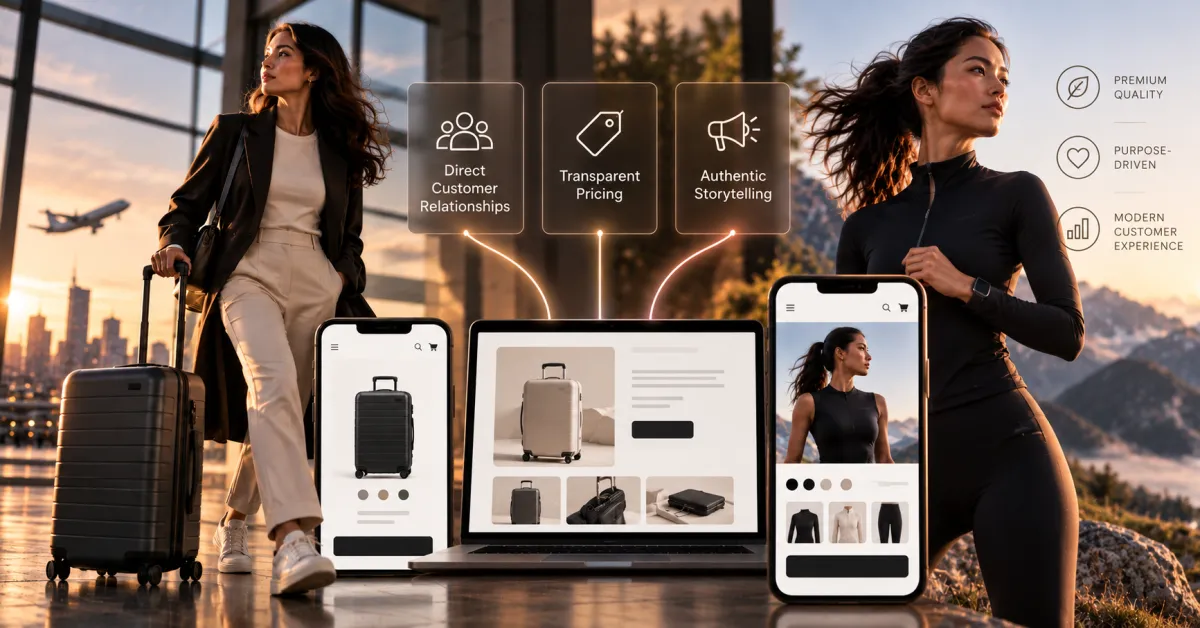
Female-founded DTC luxury brands are disrupting traditional retail by cutting out middlemen, controlling their narrative, and building communities instead of just selling products. Founders like Steph Korey at Away and others in this wave are leveraging direct relationships with customers, transparent pricing, and authentic storytelling to compete with established luxury houses that have dominated for decades.
Why DTC Luxury Even Became a Thing
Here’s the thing about traditional luxury retail – it was designed to be exclusive and expensive, not necessarily because the products were better, but because the distribution was controlled. You paid for the brand, the location, and the middleman markup. A lot of markup.
Direct-to-consumer brands flipped the script. By selling straight to customers, they eliminated wholesale markups, retail rent, and a whole layer of unnecessary overhead. That means better pricing without sacrificing quality. For luxury goods, where customers are already dropping serious money, this model is genuinely appealing.
Female founders caught onto this shift faster than most. They understood that modern luxury isn’t about gatekeeping – it’s about access, quality, and knowing your customer personally. Steph Korey and Jen Rubio built Away on this exact principle. They made luxury travel gear accessible without the department store markup, and they built a community around it.
The Players Reshaping Luxury DTC
Away – The Travel Brand That Actually Listened
Away launched in 2016 and immediately made luggage interesting, which is wild when you think about it. Steph Korey and Jen Rubio recognized that travelers wanted quality luggage without paying $500+ for a Samsonite with a fancy logo. They built direct relationships with customers, gathered feedback constantly, and iterated on their products based on actual needs.
The brand hit a valuation of over $1 billion by 2021, making it one of the fastest-growing luxury startups. They didn’t do this by copying what existed – they did it by asking what was broken and fixing it. The DTC model let them control pricing, quality, and customer experience entirely.
Jelenew and the Emerging Wave
Jelenew represents a newer generation of female-founded luxury brands entering the DTC space. These aren’t one-off success stories anymore – they’re part of a broader movement where women founders are launching in jewelry, fashion, wellness, and home goods with the same playbook: quality product, transparent pricing, and direct customer connection.
What’s interesting is that these brands aren’t trying to be the next Hermès. They’re building their own category. They’re competing on authenticity, not heritage. On innovation, not tradition.
What Makes Female Founders Different in This Space
This isn’t about gender essentialism or any of that nonsense. But there are real, observable differences in how female founders are approaching luxury DTC compared to their male counterparts.
First – community building. Female-founded luxury brands tend to prioritize community and conversation over pure transactions. They’re more likely to engage with customers on social media, ask for feedback, and actually implement it. They treat customers like collaborators, not wallets.
Second – transparency. There’s less mystique-mongering. Female founders in this space tend to be upfront about pricing, manufacturing, and why products cost what they cost. This builds trust in ways that luxury gatekeeping never could.
Third – solving real problems. Rather than creating demand for something nobody needs, female founders often start by identifying friction in their own lives or their communities. Away solved the luggage problem. Other founders solved the jewelry accessibility problem, the skincare problem, the sustainable fashion problem. They started with a genuine itch to scratch.
The Business Model That Actually Works
DTC luxury isn’t just a marketing strategy – it’s a fundamentally different business architecture. Here’s how it breaks down-
- No wholesale markup – Products go from manufacturer to customer, cutting out 40-50% of traditional retail margins
- Customer data – Direct sales give you insights into who’s buying, what they want, and how to reach them
- Faster iteration – You can test new products, get feedback, and pivot without waiting for department store buyers to approve anything
- Brand control – You own the entire customer experience, from packaging to customer service
- Pricing power – You can offer luxury quality at mid-market prices, or premium pricing at any point you choose
Female founders have proven they understand this model intuitively. They’re not treating DTC as a sales channel – they’re treating it as a relationship channel.
The Real Challenges They’re Facing
Let’s be honest – scaling a DTC luxury brand is brutal. You need capital for inventory, customer acquisition costs are insane, and you’re competing against brands with centuries of brand recognition.
Female founders face additional headwinds. Venture capital still skews male, which means raising money is harder. Media coverage is inconsistent. And there’s always the underlying sexism of being taken less seriously than male founders in the same space.
But here’s what’s changed – the market is starting to reward the results. When your brand hits unicorn status, investors pay attention regardless of who founded it.
What’s Next for Female-Founded DTC Luxury
The wave isn’t slowing down. We’re seeing female founders launch DTC brands in categories that were previously dominated by legacy luxury houses – jewelry, fashion, beauty, home goods, even automotive accessories.
The playbook is proven. Build something people actually want. Talk to customers directly. Price it fairly. Tell the truth about what it is. Repeat.
The next phase will likely involve consolidation and expansion. Some of these brands will get acquired by larger luxury conglomerates. Others will build their own empires. Either way, the model has proven that you don’t need a 150-year history to own the luxury space.
FAQ
What makes a DTC brand different from traditional luxury retail?
DTC brands sell directly to customers online, eliminating wholesale markups and retail intermediaries. This lets them offer luxury quality at lower prices while maintaining better margins. Traditional luxury relies on department stores, boutiques, and controlled distribution to maintain price positioning and exclusivity.
Why are female founders succeeding in DTC luxury specifically?
Female founders tend to prioritize customer relationships, transparency, and solving real problems over maintaining artificial scarcity. These values align perfectly with what DTC customers want – quality products, honest pricing, and genuine engagement. It’s not that women are naturally better at business, it’s that their approach happens to match market demand.
Is DTC luxury actually sustainable long-term?
Yes, but it requires constant innovation and customer engagement. The advantage of controlling your entire supply chain and customer relationship is also the burden – you can’t coast on brand heritage. You have to keep earning customer loyalty through quality and service. Female-founded brands have shown they can do this at scale.
How much cheaper is DTC luxury compared to traditional brands?
Typically 30-50% cheaper for comparable quality, depending on the category. A luxury suitcase from a traditional brand might cost $600-800. Away’s equivalent is around $300-400. That gap comes from eliminated retail markup and advertising spend efficiency through direct customer relationships.
Are these brands actually sustainable or eco-friendly?
It varies by brand, but female-founded DTC luxury brands tend to be more transparent about manufacturing and sustainability practices. Some prioritize it heavily, others less so. The DTC model itself doesn’t guarantee sustainability – that’s a choice each brand makes. But the direct customer relationship makes it easier to communicate and be held accountable for those choices.
Final Take
The rise of female founders in DTC luxury isn’t about women being better at business. It’s about a business model that rewards the things female founders prioritize – authenticity, community, transparency, and solving actual problems. The market is responding because customers want these things. Legacy luxury brands are taking notes, and they should be.