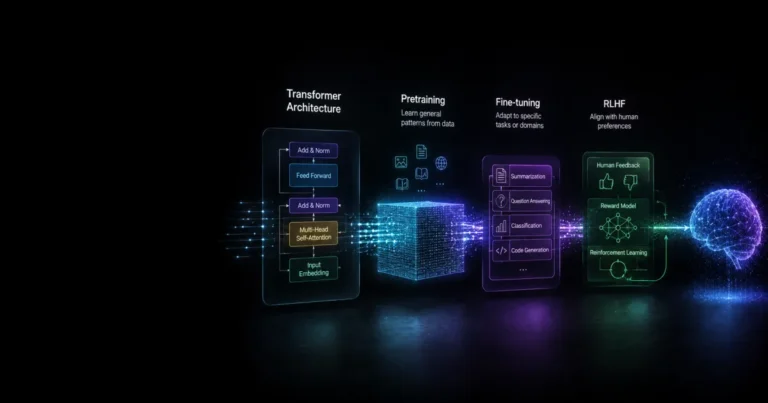

Frontier AI isn’t some distant sci-fi concept anymore. It’s sitting in your enterprise right now, quietly solving problems that would’ve required armies of people five years ago. The gap between what AI can theoretically do and what companies are actually shipping has collapsed, and the results are either impressive or terrifying depending on who you ask.
Frontier AI refers to cutting-edge artificial intelligence systems that push beyond current capabilities – think large language models, multimodal AI, and autonomous reasoning systems. In enterprise settings, these aren’t replacing humans wholesale. Instead, they’re handling complex tasks like document analysis, customer service at scale, predictive maintenance, and strategic decision-making that previously demanded specialized expertise. Real companies across finance, healthcare, manufacturing, and retail are already seeing measurable ROI, not just pilot projects gathering dust.
When AI Actually Delivers – Finance Gets Honest About It
JPMorgan Chase deployed COIN (Contract Intelligence) a few years back, and it’s worth understanding because it shows what frontier AI looks like when you’re not overselling it. The system reads through commercial loan agreements – thousands of pages of legal jargon that used to require junior analysts to manually extract key terms and obligations.
COIN does this in seconds. Not perfectly, but reliably enough that it reduced the review time from 360,000 hours annually to near-instant processing. That’s not a 10% improvement. That’s a complete restructuring of how they handle a core workflow. The money saved? Reinvested into more complex analysis that actually needs human judgment. No layoffs were announced. People moved to different work.
The key detail everyone misses: JPMorgan didn’t wait for AI to be perfect. They deployed it knowing it would make mistakes, built in verification steps, and iterated. That’s the real enterprise playbook, not the “replace everything” fantasy.
Healthcare Systems Learning to Trust Predictions
Mayo Clinic and Cleveland Clinic have been quietly using AI for diagnostic support and patient risk stratification. Frontier models trained on millions of patient records can flag which patients are most likely to develop sepsis, readmit within 30 days, or need intervention before their condition deteriorates.
Here’s what makes this different from older predictive systems – these models can explain their reasoning in natural language. A doctor asks why the AI flagged a patient as high-risk, and gets back a coherent explanation referencing specific lab values, comorbidities, and historical patterns. That transparency matters when someone’s life is on the line.
The catch? Adoption is slower than you’d expect. Clinicians are trained to be skeptical of black boxes, and rightfully so. The hospitals that are winning aren’t forcing AI into workflows. They’re training doctors to use it as a second opinion, then measuring outcomes.
Manufacturing Gets Preventive About Maintenance
Siemens deployed AI-driven predictive maintenance across industrial facilities, and the results look like something from a business school case study that actually happened. By analyzing sensor data from machinery in real-time, frontier AI models predict component failures days or weeks before they occur.
Unplanned downtime in manufacturing costs thousands per hour. Predictive maintenance doesn’t eliminate breakdowns – it schedules them. Maintenance happens during planned windows instead of at 2 AM when a critical line goes down. The ROI calculation is straightforward: fewer emergency repairs, less waste, better production schedules.
The implementation challenge isn’t the AI. It’s getting decades-old industrial equipment to talk to modern data systems. Most wins here come from companies that already had decent sensor infrastructure. The frontier AI part is just the last 20% of the puzzle.
Retail Rethinks Inventory and Customer Experience
Amazon, Walmart, and Target are using frontier AI for inventory optimization that goes beyond simple demand forecasting. These systems predict not just what will sell, but where it will sell, when, and at what price point to maximize margin while keeping shelves stocked.
The AI also personalizes customer experience at scale – recommendations, dynamic pricing, supply chain routing. Frontier models can process millions of variables simultaneously and make decisions that would paralyze a human analyst.
Real talk though: this creates a customer experience arms race. Shoppers expect personalization now. Companies not investing in this capability are falling behind. The frontier AI here isn’t optional anymore – it’s table stakes.
What Actually Makes These Work
Data quality matters more than model sophistication. A mediocre AI trained on clean, well-organized data outperforms a cutting-edge model trained on garbage. Every successful deployment started with someone doing the unsexy work of getting their data house in order.
Change management is the real bottleneck. The technology works. People are harder to convince. Companies that won focused on training staff, building trust through transparency, and giving people time to adapt. The ones that tried to force AI into workflows ran into resistance and quietly shelved projects.
You need clear metrics before you start. “Increase efficiency” isn’t a metric. “Reduce processing time by 70% while maintaining 95% accuracy” is. Every company that knew exactly what success looked like before deploying AI had better outcomes.
Partial automation beats the dream of full automation. The most successful implementations use AI to handle routine cases and flag edge cases for humans. A loan approval system that handles 80% of applications automatically and routes 20% to specialists works. A system that tries to handle everything fails.
The Mistakes Companies Actually Make
Thinking frontier AI is a one-time implementation rather than an ongoing process. These systems need monitoring, retraining, and adjustment as data patterns shift. Companies that treat deployment as the finish line instead of the starting line end up with models that degrade over time.
Underestimating the need for domain expertise. AI engineers can build the system, but understanding how it applies to finance, healthcare, or manufacturing requires people who know that industry. The best teams pair AI specialists with subject matter experts.
Overestimating accuracy requirements. Perfect AI is impossible. The question isn’t “will this be 100% accurate?” It’s “is this better than our current process and safe enough to deploy?” Most frontier AI deployments succeed with 85-90% accuracy because that’s already better than human performance at scale.
What’s Coming Next
Frontier AI is moving toward multimodal systems that handle text, images, audio, and video simultaneously. That opens possibilities for quality control in manufacturing, compliance monitoring in healthcare, and security applications that don’t exist yet.
Reasoning models that can work through complex problems step-by-step are improving faster than anyone predicted. This matters for strategic planning, R&D acceleration, and decision-making that currently requires senior expertise.
The real frontier isn’t the AI itself anymore. It’s companies figuring out how to integrate these systems into existing workflows without burning everything down. That’s where the actual competitive advantage lives.
FAQ | Real Questions About Enterprise Frontier AI
Do companies actually see ROI from frontier AI, or is it all hype?
The companies we’ve covered – JPMorgan, Mayo Clinic, Siemens, Walmart – are seeing measurable returns. Processing time down, costs down, quality up. The hype comes from companies that deploy AI without clear goals and then act surprised when it doesn’t magically fix their problems. ROI is real when you know what you’re measuring.
How long does it take to implement frontier AI in an enterprise?
Depends entirely on your starting point. If you have clean data and clear use cases, you might see results in 3-6 months. If you’re starting from fragmented data systems and unclear workflows, it could take 18-24 months just to get ready. The AI part is fast. Everything else takes time.
Do we need to replace our entire IT infrastructure to use frontier AI?
Not necessarily. Most successful deployments work with existing systems. The constraint is usually data integration – getting information from legacy systems into a format the AI can work with. That’s an engineering problem, not a “rip and replace” situation.
What happens to jobs when companies deploy frontier AI?
The evidence suggests roles change more than they disappear. Junior analysts move into validation and oversight. Routine tasks get automated. Complex work expands. Companies that handle this transition well invest in retraining. Companies that don’t deal with turnover and morale problems.
How do we know if frontier AI is actually working or just giving us confident-sounding wrong answers?
Validation and monitoring. You compare AI outputs against known correct answers, measure accuracy over time, and set up alerts when performance degrades. You also keep humans in the loop for high-stakes decisions. There’s no magic here – just discipline.
The Bottom Line
Frontier AI in enterprise isn’t about replacing people or achieving some sci-fi singularity. It’s about taking work that’s repetitive, time-consuming, or requires processing massive amounts of data, and letting machines handle it while humans focus on judgment calls and strategy. The companies winning aren’t the ones with the fanciest AI. They’re the ones with clear goals, good data, patient change management, and the sense to treat this as an ongoing process, not a one-time project.